
Chinese Medicine

Chinese Medicine is a complete system of healing that developed in China about 3,000 years ago and has changed very little over the centuries. It is based on the idea that the laws of nature can be used to understand the inner workings of the body, mind and spirit. By taking a step back into the past helps to understand ancient philosophical thinking and how it is so relevant for health in the 21st century.
When Gisela qualified in 1986, Chinese medicine was viewed as wild and mysterious. Since then here have been dramatic changes – the House of Lords has recommended its use on the NHS, extensive media coverage, research studies showing its effectiveness and acupuncture is much more broadly accepted by Western medicine.
Yin Yang
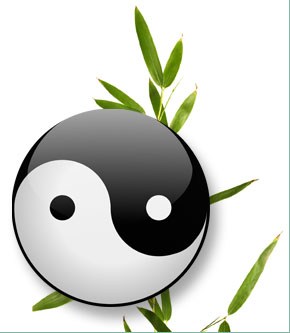
The circle symbolizes the wholeness and infinity of Qi. There is no beginning nor ending. This is a traditional symbol representing the forces of yin and yang, the circle of life and the cosmos that contains the yang (light) and the yin (dark), where one cannot exist without the other. The movements in the symbol are meant to be continuous and smooth representing the Tao or ‘the way’.
Although yin and yang may appear to be opposites, they only exist by virtue of each other. Things are yin or yang only in relation to another i.e. dark and light; night and day; heaven and earth; front and back; up and down; hot and cold; women are yin and men are yang. Even though it may be night the sun has not disappeared – it is just somewhere else!
Qi
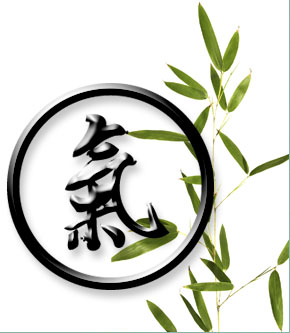
Qi permeates everything in the universe. It is life force energy. We have the Qi that we are born with and the ‘post natal’ Qi we cultivate through air, food and water. A healthy and happy person is a dynamic but harmonious mixture of all the aspects of Qi that make up who we are.
Every organ and system in the body has its own form of Qi. And there is the Qi that emanates specifically from trees, flowers, lakes and mountains. Qi is the body’s vital energy which circulates through the channels and permeates the body. For optimum health and vitality, the Qi of the body and mind must remain in a state of balance. If the flow of Qi is disrupted, due to physical trauma, poor nutrition or emotional strain, for example, illness may result.
Elements
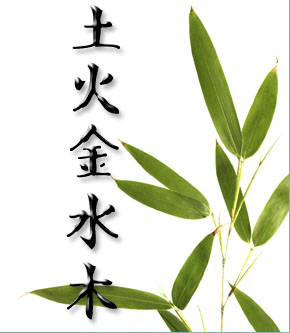
A system based on observations of the natural world; the seasons and cycles working in harmony. It is built around the elements: water, wood, fire, metal and earth. Ancient masters recognized that these elements or phases were within us as well as around us. Gisela was originally trained in five element acupuncture and latterly TCM, which she combines in daily practice.
The Elements are also related to the vital organs of the body – the heart, kidneys, liver, lungs and spleen. Each is associated with a colour, sound, odour, emotion and season. So for example, the liver is related to wood, anger, the ligaments and spring time. Each of us is a combination of all five elements, but we tend to have a dominant element with helps define us. Creating a balance of the elements is part of achieving positive health.
Traditional Chinese Medicine (TCM)

Traditional Chinese Medicine (TCM) is an approach that recognizes our health is subject to constant battling between opposing forces such as heat and cold, joy and sadness, full and empty, which manifest themselves in the body as too much or too little activity in particular organs. An imbalance between any of these forces can cause a blockage in the flow of your Qi or vital energy, which travels through the body along invisible pathways known as meridians.
When for example a deficiency has been identified, acupuncture is used to tonify, to build up the appropriate organ. Or when too much heat is present, it is expelled or cooled.
Gisela uses the TCM approach of using herbs and acupuncture to help unblock your Qi and bring your body back into harmony and wellness.
Causes

Chinese medicine looks at internal and external influences that have disturbed the harmony and balance of the whole energy system. The internal organs influence not only the physical functioning but also the psychological and spiritual aspects. The ancient Chinese believe that an excess or extreme of emotions affect organs and energy flow. For example anger knots liver Qi and is related to pre-menstrual syndrome or over worry affects stomach Qi.
The external causes are hostile climatic conditions that influence the body. These include wind, cold, damp, dryness and heat. Other causes of disease are also looked at such as toxins, over-work, lifestyle, poor diet and exercise. Accidents, trauma – physical or mental, and a weak constitution also play a role. All this information is gathered to help discover imbalances in your body and the reasons for ailments and illnesses.
Diagnosis

An acupuncture treatment begins with a traditional diagnosis. It is a longer than usual session where Gisela will ask you in detail about your main complaint. She will be looking at underlying causes and patterns, all of which guide treatment. You will be asked about other symptoms, your medical history and current medication. A picture is gathered on your general state of health, including your respiration, circulation, digestive system, sexual health, sleep patterns, joints and other aches and pains.
Your emotional wellbeing is looked at and how your lifestyle, stress and anxieties affect you.
To gather a fuller picture, Gisela will look at your tongue and read your pulses noting their quality, strength and rhythm. All this leads to a diagnosis, on which basis individual treatments are given taking account of each person’s unique patterns.
Meridians

Meridians are often described as channels of energy. They travel around and within the whole body. The meridians and connecting vessels are a complex distribution system that carries Qi, blood and the body fluids throughout.
A useful analogy is to describe the flow of Qi as a river. A river has a source and it follows its course ultimately to the ocean. Its flow can be shallow, deep, quick or slow flowing, while always following its natural path. A weakness or block in the flow of energy could result in disease or illness.